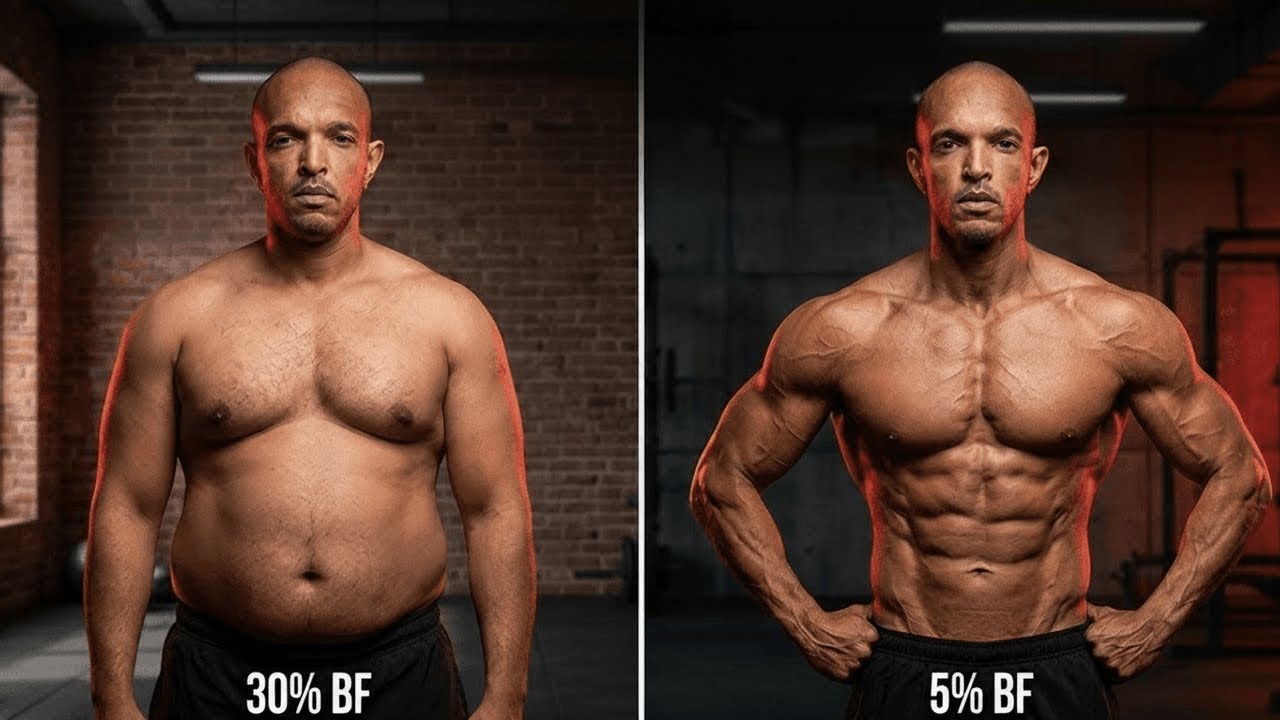
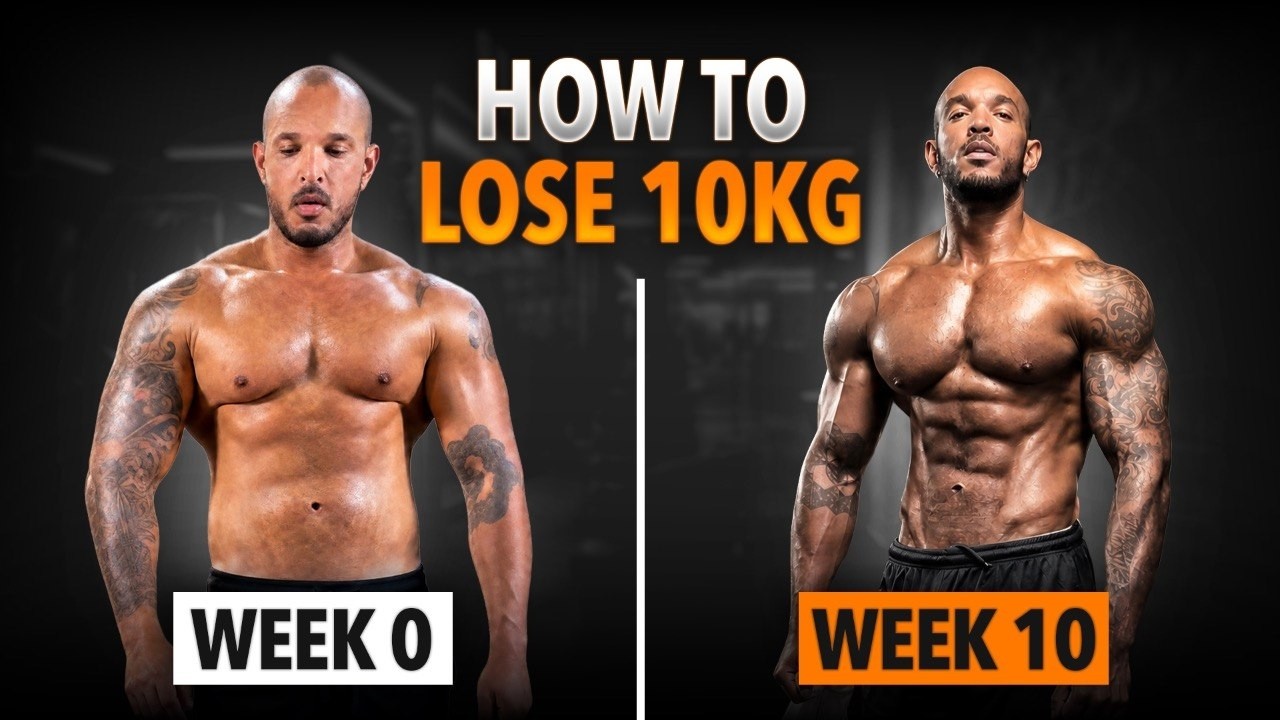
- To lose 10 kg, the order matters more than the effort: fix sleep and stress first, cut calories second, finish with planned breaks.
- On 5.5 hours of sleep, dieters in a controlled study lost 55% less fat and 60% more lean mass than on 8.5 hours.
- Phase 1 (weeks 1 to 3): maintenance calories or a 200 kcal deficit, at least 6.5 hours of sleep, heavy lifting, little cardio.
- Phase 2: a 500 to 600 kcal deficit, carb cycling, fasted walks on rest days, 2.2 to 2.4 g of protein per kg.
- Phase 3: two days at maintenance in week 8, then a final push. In men with obesity, diet breaks gave more fat loss than dieting straight through.
Quick answer: How to lose 10kg comes down to order. In weeks 1 to 3, fix sleep and stress at maintenance calories and lift heavy. Then cut 500 to 600 kcal a day with carb cycling, fasted walks and 2.2 to 2.4 g of protein per kg. In week 8, take two days at maintenance. At 0.5 to 1 kg a week, expect 10 to 20 weeks.
You want to drop 10 kilos. You've tried more than once. You did the calorie deficit, you did the cardio, you pushed harder than most people around you, and the weight didn't move.
The worst part isn't that it didn't work. The worst part is that you were doing everything you were supposed to.
The problem was never your effort. It was your sequence. Stay with me, because phase one is the piece nobody talks about, and without it phases two and three don't work.
Why do men fail to lose 10kg even in a calorie deficit?
Most men trying to lose fat are already in a broken state before they start: poor sleep, high stress, work pressure, family pressure. Cut calories hard in that state, add cardio on top, and you burn muscle while the fat stays where it is.
The harder you push, the tighter your body holds on. That's not a motivation problem. That's your biology fighting you.
And the research backs this up. In a controlled study, overweight adults on the same diet slept either 8.5 or 5.5 hours a night for two weeks. On short sleep, the share of weight lost as fat dropped by 55% and the loss of lean mass rose by 60% (Nedeltcheva et al., 2010). Same calories. Different body.
Sleep also hits your hormones. One week of sleeping five hours a night cut daytime testosterone by 10 to 15% in young healthy men (Leproult & Van Cauter, 2011). And in a study of 284 Swedish men aged 51, stress-related cortisol secretion was linked with abdominal obesity (Rosmond et al., 1998).
So the man sleeping five hours, drinking three coffees a day, training super hard and cutting calories hard is running a system built to store fat, not lose it.
What I see coaching men
I was 140 kg (309 lb) at 14. I've coached for 12 years, and my team has coached more than 1,000 men. I've seen this pattern hundreds of times.
Milan came to me eight months into training four days a week. He was eating less than he ever had, moving more than he ever had, and he looked exactly the same. He wasn't lazy. He wasn't broken. He was fighting his own biology.
His result is on our results page: 12 kg of fat gone in 11 weeks. Same man, completely different body. The difference wasn't genetics, time or even effort. It was knowing which problem to fix first. The way he put it to me: he wasn't doing the wrong things, he was doing them in the wrong order.
So here are the three phases, in that order.
How do you reset your body before cutting calories? (Phase 1)
You reset by bringing cortisol down and fixing sleep while eating at maintenance, before any real deficit. Most coaches skip this phase. They go straight to the deficit and straight to the cardio, and that's exactly why most people quit within the first three weeks.
Because if cortisol is high, an aggressive deficit costs you muscle, not fat. The same cut that works in week four will wreck you in week one. Sequence is everything.
- Calm the stress system. I use magnesium glycinate, 400 mg before bed, and ashwagandha, 300 to 600 mg a day. In a randomised placebo-controlled trial in stressed adults, ashwagandha root extract lowered serum cortisol by 27.9% from baseline after 60 days, against 7.9% on placebo (Chandrasekhar et al., 2012). In older adults with insomnia, magnesium improved sleep efficiency and sleep onset and lowered serum cortisol (Abbasi et al., 2012). If you're on medication or have a thyroid or liver condition, speak to your doctor first.
- Sleep at least 6.5 hours a night. Same wake-up time every morning, weekends included. Room dark, room cool. No screens for 60 minutes before bed. Sleep isn't recovery. Sleep is the protocol.
- Train heavy compounds at moderate intensity. Don't add lots of cardio. If your system is already under fire, extra cardio is extra stress.
- Eat at maintenance, or a very small deficit of 200 kcal. You're not trying to lose fat in phase one. You're making your body capable of losing fat.
And expect the scale to sit still. Milan almost quit at the end of week two. He messaged me because the scale hadn't moved and he felt he was wasting his time. I told him the scale not moving was the proof it was working: his nervous system was coming down. He stayed. In week four, everything changed.
What does the fat-loss phase look like? (Phase 2)
Once sleep is better and stress is down, you attack: a deficit of 500 to 600 kcal a day. Applied now, it burns fat. In week one, it would've mostly cost you muscle. That one difference is worth 10 years of failed dieting.
Carb cycling, not the same food every day
Over a week I lay it out like this:
- 2 high-carb days on your hardest training days: rice, oats, sweet potatoes, timed around training.
- 2 moderate-carb days.
- 2 low-carb days for more fat burning.
- 1 near-zero-carb rest day.
But why not eat the same every day? Because your body fights a steady diet. As you lose weight, leptin falls, energy expenditure drops and hunger rises, a defence researchers call adaptive thermogenesis (Rosenbaum & Leibel, 2010). The high-carb days give it something back, the low-carb days push fat burning. You're giving your body a moving target.
Then you can try 16/8 time-restricted eating, with your eating window from noon to 8 pm. But if you're extremely stressed, this might not be the right strategy for you.
Fasted walks on rest days
Walk 35 to 45 minutes on rest days, fasted, at conversational pace. Not faster. You're not trying to kill yourself, and going faster spikes cortisol. A meta-analysis of 27 studies found that fasted aerobic exercise burns more fat during the session than fed (Vieira et al., 2016).
Weights four days a week
- Heavy compounds first, always: squats, deadlifts, bench, rows.
- Three seconds on the lowering part of every rep.
- A metabolic finisher at the end: battle ropes, sled push or bike sprints. Three rounds, nothing more.
- Stop two reps before failure. A calorie deficit already drives cortisol up. Training to failure on top of it would break you in a couple of weeks.
2.2 to 2.4 g of protein per kg
That's roughly 1 g per lb of bodyweight. In a McMaster University trial, young men in a 40% calorie deficit who trained hard and ate 2.4 g per kg gained 1.2 kg of lean mass and lost 4.8 kg of fat in four weeks. The group on 1.2 g per kg gained almost no lean mass and lost 3.5 kg of fat (Longland et al., 2016).
So at this point you're not just losing weight. You're changing what your body is made of. For why belly fat holds on, read how to lose belly fat without starving.
How do you finish without the plateau? (Phase 3)
You finish with planned maintenance days, not a harder push. This is where most people collapse at the finish line.
- Eat at maintenance on days 1 and 2 of week 8. Not a cheat day. A planned diet break. Same protein, same food quality, same structure, just more carbs. Clean carbs, not pizza and pastries.
- Weeks 9 and 10: a 600 kcal deficit, with one maintenance refeed day a week to keep performance high.
- One HIIT session a week, 20 minutes, no more. One session does the job. Three raise cortisol and undo it.
- Deload in weeks 5 and 9. Same weights, 40% fewer sets. After a deload, results speed up every single time.
Most men are terrified of eating more mid-plan. And that fear is exactly what ends a 10-week effort two weeks early. The best trial we have on this was done in men: in the MATADOR study, men with obesity who alternated two weeks of dieting with two weeks at maintenance lost 12.3 kg of fat, against 8.0 kg for men who dieted straight through, and their resting metabolism dropped less (Byrne et al., 2018).
How long does it take to lose 10kg?
At the NHS's recommended pace of 0.5 to 1 kg a week, 10 kg (22 lb) takes about 10 to 20 weeks (NHS). Ten weeks is the fast end. And you get there by not wasting the first month on a cut your body can't use.
| The usual way | The 3-phase way | |
|---|---|---|
| Week 1 calories | Hard deficit straight away | Maintenance or 200 kcal under |
| Sleep | Whatever is left after work | 6.5 hours minimum, fixed wake-up |
| Cardio | Lots, hard, every day | Conversational walks, one short HIIT late on |
| Carbs | Same low intake every day | Cycled to training days |
| Weights | To failure, every set | Heavy compounds, two reps in reserve |
| Protein | Not tracked | 2.2 to 2.4 g per kg |
| Week 8 | Push harder | Two days at maintenance |
| What you track | The scale, daily | Morning energy and waist, weekly |
How do you know the plan is working week by week?
You judge each phase by a different sign, and the scale is only one of them.
- Phase 1: the scale won't move. Track morning energy instead. If you're waking up with more energy by week two, the stress loop is breaking.
- Every Monday: measure your waist, fasted, same time. The scale lies. The tape doesn't.
- Phase 2: the scale starts moving and the mirror follows.
- Phase 3: other people notice before you do.
If the waist won't move even when you get the order right, the problem may sit in your blood work. That's where the blood tests I'd run when fat loss stalls come in.
What to do tomorrow
You've been trying to lose weight with the wrong sequence. Not the wrong effort, not the wrong discipline. The wrong sequence.
- Phase 1: fix the environment that's been storing the fat.
- Phase 2: attack with a body that's finally ready to burn it.
- Phase 3: push through the finish without the metabolic slowdown.
Start tonight: same wake-up time tomorrow, screens off an hour before bed, and calories at maintenance this week. My free guides are on the guides page. If you want this built around your sleep, your training, your blood work and your schedule, apply here and we'll talk.
 9:23

The Sleep & Cortisol Reset
Lower cortisol, deeper sleep, and the fat loss that follows. Comment CORTISOL on any of my Instagram reels and I'll send it to you.
Get it free →Frequently asked questions
How long does it take to lose 10kg?
The NHS recommends losing 0.5 to 1 kg a week, so 10 kg (22 lb) takes roughly 10 to 20 weeks. Ten weeks is the fast end and works best when you start with sleep and stress already under control. Men who sleep five hours and live on coffee usually stall, because the deficit takes muscle instead of fat.
Why am I not losing weight in a calorie deficit?
Often the deficit is fine and your state isn't. Short sleep and high stress push the body to protect fat and give up muscle. In a controlled study, dieters on 5.5 hours of sleep lost 55% less fat than on 8.5 hours, on the same calories. Fix sleep first, then cut, and track your waist, not only the scale.
Can you lose 10kg in 10 weeks?
It's possible for many men with weight to lose, but it's the top of the safe range, about 1 kg a week. It works when you go in order: two to three weeks of sleep and stress reset at maintenance calories, then a 500 to 600 kcal deficit, then planned maintenance days near the end. Starting with a hard cut is what usually fails.
Should I do cardio to lose 10kg?
Less than you think, and the right kind. If you're stressed and sleeping badly, lots of hard cardio adds to the load. I use walking at conversational pace for 35 to 45 minutes on rest days, often fasted, plus one short interval session near the end. The four weekly weight sessions do most of the work.
How much protein do I need to lose fat and keep muscle?
I use 2.2 to 2.4 g per kg of bodyweight a day during the cut, roughly 1 g per lb. In a McMaster University trial, young men in a big deficit who ate 2.4 g per kg and trained hard gained 1.2 kg of lean mass and lost 4.8 kg of fat in four weeks, more than the group on half that protein.
Is a diet break the same as a cheat day?
No. A diet break means eating at maintenance with the same protein, the same food quality and the same structure, just more carbs like rice, potatoes and oats. It isn't pizza and pastries. In the MATADOR study, men with obesity who alternated two weeks of dieting with two weeks at maintenance lost more fat than men who dieted straight through.

Founder of Shapable. Sports Science and Nutrition graduate, 12 years coaching, and 140 kg at 14. His team has coached more than 1,000 men.
About Cesare →Sources (10)
- Nedeltcheva AV et al. (2010). Insufficient sleep undermines dietary efforts to reduce adiposity. Ann Intern Med 153(7):435–441. PubMed 20921542.
- Leproult R, Van Cauter E (2011). Effect of 1 week of sleep restriction on testosterone levels in young healthy men. JAMA 305(21):2173–2174. PubMed 21632481.
- Rosmond R, Dallman MF, Björntorp P (1998). Stress-related cortisol secretion in men: relationships with abdominal obesity and endocrine, metabolic and hemodynamic abnormalities. J Clin Endocrinol Metab 83(6):1853–1859. PubMed 9626108.
- Chandrasekhar K, Kapoor J, Anishetty S (2012). A prospective, randomized double-blind, placebo-controlled study of safety and efficacy of a high-concentration full-spectrum extract of ashwagandha root in reducing stress and anxiety in adults. Indian J Psychol Med 34(3):255–262. PubMed 23439798.
- Abbasi B et al. (2012). The effect of magnesium supplementation on primary insomnia in elderly: a double-blind placebo-controlled clinical trial. J Res Med Sci 17(12):1161–1169. PubMed 23853635.
- Rosenbaum M, Leibel RL (2010). Adaptive thermogenesis in humans. Int J Obes 34(Suppl 1):S47–S55. PubMed 20935667.
- Vieira AF et al. (2016). Effects of aerobic exercise performed in fasted v. fed state on fat and carbohydrate metabolism in adults: a systematic review and meta-analysis. Br J Nutr 116(7):1153–1164. PubMed 27609363.
- Longland TM et al. (2016). Higher compared with lower dietary protein during an energy deficit combined with intense exercise promotes greater lean mass gain and fat mass loss: a randomized trial. Am J Clin Nutr 103(3):738–746. PubMed 26817506.
- Byrne NM et al. (2018). Intermittent energy restriction improves weight loss efficiency in obese men: the MATADOR study. Int J Obes 42(2):129–138. PubMed 28925405.
- NHS. Losing weight: getting started / Overweight and obesity. nhs.uk/conditions/overweight-and-obesity.
Last updated . Educational information, not medical advice. Speak to your doctor before changing medication or starting supplements, especially if you have a medical condition.