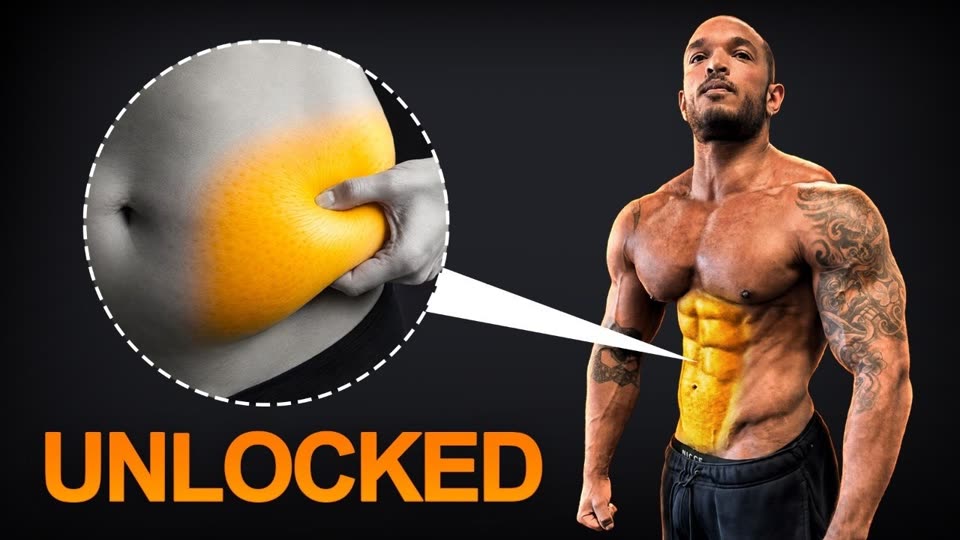

- Start with any plan this week. A plan that exists beats a perfect one you're still researching.
- Judge your weight by the 7-day average, not this morning's number. Daily swings of up to 2 kg (4 lb) are mostly water.
- Lift weights first and add cardio second. Dieting without lifting costs you muscle, not just fat.
- Protein at every meal, 7+ hours of sleep and a food scale for two weeks do more than any supplement.
- Your body changes before your head does. Plan for that, and one bad day stops being a reason to quit.
Quick answer: The things I wish I knew before losing weight are simple. Start with any plan, not the perfect one. Healthy food isn't automatically low in calories. Judge the weekly trend, not the daily number. Lift weights first, eat protein at every meal, sleep 7+ hours and skip fat burners. And expect your head to change slower than your body.
I was 140 kg (309 lb) as a teenager. Then I lost more than 60 kg (132 lb).
It took me far longer than it should have. I followed the wrong advice for months, obsessed over the scale, did endless cardio and wasted money on supplements. Some of what I believed about losing weight was flat-out wrong.
So if I could sit down with the 140 kg kid before any of it started, these are the 21 things I'd tell him. Some of them would have saved me actual years. If you're a man in your thirties or forties who has "tried everything", I'd bet at least five of these are what's holding you back right now.
The 21 lessons at a glance
- You don't need the perfect plan. You need any plan.
- Healthy does not automatically mean good for weight loss.
- The scale will lie to you, constantly.
- You crave textures and feelings, not specific foods.
- Lifting builds the body you want. Cardio just moves the scale.
- Emotional eating is real, and you have to name it.
- Protein at every meal makes fat loss dramatically easier.
- Motivation is a myth. Momentum is what works.
- Never eat carbs completely alone.
- Every diet that ever worked comes down to calories and protein.
- Sleep decides your body composition as much as training does.
- Weigh your food, at least for a while.
- Your cravings are messages, not weakness.
- Processed food is engineered to be overeaten.
- The last bit of fat is always the hardest.
- Stop buying supplements before you fix the fundamentals.
- The deeper you get, the less the scale tells you.
- One bad day does not undo six months.
- If you're still calling it a diet, you'll quit eventually.
- You lose the weight in your body long before you lose it in your head.
- Perfection is what's stopping you, not information.
The first ten would have made losing the weight easier. The second half decided whether I kept it off. Here's what each one means.
What's the first thing to know before you start losing weight?
You don't need the perfect plan to start. You need any plan. I spent months researching before I did anything: reading about diets, watching videos, telling myself I'd start properly once I'd figured out the right approach.
That isn't preparation. That's fear in a smart-sounding disguise. The day I actually started, my plan wasn't great, but it beat all that research, because now it existed.
And don't wait to feel motivated (lesson 8). I don't wake up excited to train either. What carries you is momentum: small streaks, and showing up on the days you don't feel like it. Not a feeling you're waiting for.
Why can "healthy" food stop you losing weight?
Because healthy and low in calories are two completely different things. I went on a whole-foods kick and ate nuts by the handful because they're healthy. I gained weight. A couple of handfuls of almonds, about 50 g (1.8 oz), is close to 300 calories.
That's lesson 10 too. I tried keto, fasting and whatever else was trending. Every one that worked was calories and protein in disguise. The research says the same: in the DIETFITS trial, 609 adults on a healthy low-fat or a healthy low-carb diet lost almost the same weight over 12 months, 5.3 kg vs 6.0 kg (Gardner, 2018). Once you get that, you stop needing permission from anyone else's rulebook.
Lesson 12 is how you find out what you really eat: weigh your food for two weeks. People are terrible at guessing. In one study, men and women who said they ate under 1,200 calories a day were really eating over 2,000, and under-reported by 47% on average (Lichtman, 1992). Two weeks with a food scale trains your eye for life.
Then lesson 14. Processed food is built to be overeaten. When the NIH fed 20 adults ultra-processed meals, they ate about 500 calories a day more than on unprocessed meals matched for sugar, fat and fibre, and gained 0.9 kg in two weeks (Hall, 2019). That's not your fault. But fixing it is still on you.
Why does protein at every meal make fat loss easier?
Protein keeps you full, costs your body more energy to digest, and is hard to store as fat. Your body spends 20–30% of protein's calories just processing it, against 5–10% for carbs and 0–3% for fat (Westerterp, 2004). Higher-protein diets also help you hold on to muscle while you lose weight (Leidy, 2015). I ignored this for years, and it cost me.
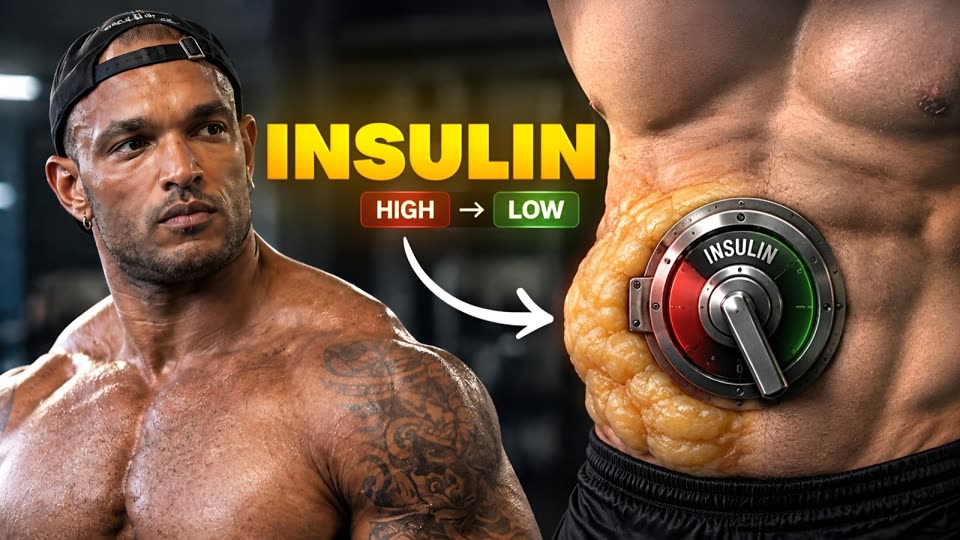
Lesson 9 sits right next to it: never eat carbs completely alone. Pair them with protein or fat. In people with type 2 diabetes, eating the protein and vegetables before the carbs in the same meal gave lower blood sugar and insulin afterwards (Shukla, 2015). If your belly fat won't move, read why insulin resistance holds on to it.
Why does the scale go up when you're doing everything right?
Because daily weight is mostly water, not fat. Early on I weighed myself every morning and that number decided my mood. Up half a kilo, miserable. Down half a kilo, on top of the world.
Your weight can swing up to 2 kg (4 lb) in a day from water, salt, carbs and sleep. So track the weekly trend and ignore the daily number.
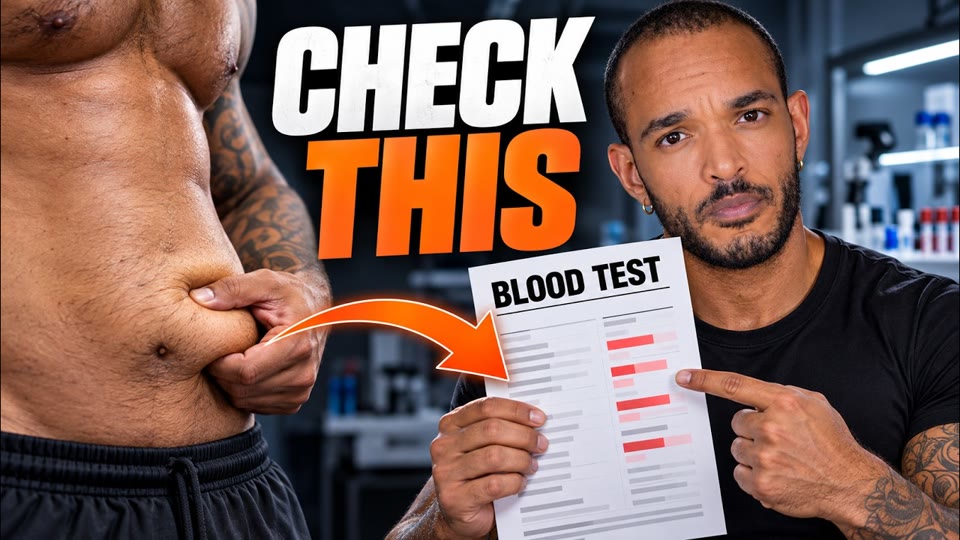
Then lesson 17 kicks in. The deeper you get, the less the scale tells you. More times than I can count, I had the same weight and a completely different body, depending on how much was muscle and how much was fat. That's when your waist, your photos and your bloodwork matter more than the number. My article on measuring visceral fat at home shows you how.
| What I believed at 140 kg | What actually works |
|---|---|
| Start once I've found the perfect plan | Start this week with any plan, fix it as you go |
| Healthy food = weight loss food | Calories still count, nuts and oils included |
| The daily weigh-in tells me how I'm doing | The 7-day average tells you how you're doing |
| More cardio = more fat loss | Lift first, cardio second, or lose muscle too |
| Sleep is optional when I'm busy | Short sleep means more hunger and more muscle lost |
| A fat burner will speed it up | No supplement has strong evidence for fat loss |
| One bad meal ruins the week | One bad meal is one bad meal |
Should you lift weights or do cardio to lose fat?
Lift first, cardio second. Lifting builds the body you actually want. Cardio just makes the scale go down.
I did an insane amount of cardio early on. Cardio burns calories, full stop. It doesn't care where the weight comes from, and done that way you lose muscle right alongside the fat. In a meta-analysis of older adults with obesity, adding resistance training three times a week to a diet prevented about 93% of the muscle the diet alone would have cost them, with the same fat loss (Sardeli, 2018).
Muscle is what makes you look lean instead of just smaller, and it's the tissue you'll be glad you kept at 50.
What are your cravings actually telling you?
You crave textures and feelings, not specific foods (lesson 4). When I wanted something salty and crunchy, I thought I needed crisps. I didn't. I wanted crunch and salt. Popcorn did the job and the craving went away.
Lesson 6 is bigger than it sounds. I used to open the fridge when I was stressed, not hungry. Close it. Open it again five minutes later, like something would magically appear. That's your brain chasing a hit of dopamine because it doesn't want to feel what you're actually feeling. Back then I didn't have a word for it, so I called myself weak. Worst possible label, because it stops you looking for the real cause.
That's lesson 13: cravings are messages, not weakness. Read the signal instead of fighting it. When the men I coach tell me sweets hit hardest at night, the first thing I check is how much protein they ate during the day.
How much does sleep affect fat loss?
As much as your training does, and this is the part nobody tells you. When you're short on sleep, ghrelin (the hormone that makes you hungry) goes up and leptin (the one that tells you you're full) goes down. In young men, two nights of four hours in bed raised ghrelin by 28%, cut leptin by 18% and pushed hunger up 24% (Spiegel, 2004).
And it changes what you lose. On the same diet, adults who slept 5.5 hours instead of 8.5 lost 55% less fat and 60% more lean mass (Nedeltcheva, 2010). You're fighting your own chemistry every day you're under-slept, however good your diet is. I ignored this for years. And it was one of the biggest mistakes of the whole process.
Do you need supplements to lose weight?
No. I wasted real money on fat burners and powders that did nothing, chasing a shortcut that doesn't exist. A 2021 review of 315 trials on 14 kinds of weight loss supplements found no strong, high-quality evidence for any of them (Batsis, 2021).
The list that matters is short: protein powder if you can't hit your protein from food, creatine, and vitamin D if a blood test shows you need it. That's basically it. Speak to your doctor before starting anything if you take medication.
How do you keep the weight off for good?
Losing the weight was only half of it. This is what almost broke me.
Lesson 15. The last bit of fat is always the hardest. That's not your body failing. Near the end, small details matter more than big changes.
Lesson 18. One bad day doesn't undo six months. I used to think one bad meal ruined the week, so I might as well keep eating badly until Monday. That thought cost me more than any meal ever did.
Lesson 19. If you're still calling it a diet, you'll quit eventually. Fit people don't diet. They eat a certain way, permanently. The people who keep weight off long term tend to stay active, eat consistently on weekdays and weekends, and keep weighing themselves (Wing & Phelan, 2005). The second I stopped calling it a diet, I stopped white-knuckling it.
Lesson 20 took me the longest. You lose the weight in your body long before you lose it in your head. I'd lost 60 kg and still saw the 140 kg kid in the mirror. One bad week and I'd slide straight back into old patterns, because my identity hadn't changed yet. Only my body had. It took years of proof before my brain caught up.
Lesson 21 brings us back to lesson 1: perfection is what's stopping you, not information. You don't need to remember all 20 of these before you begin. Start, and fix it as you go.
Where would I start this week?
- Pick a plan today. Any reasonable one. Write down what you'll eat tomorrow.
- Put protein in every meal. Build each plate around a protein first, then add carbs, never carbs alone.
- Weigh your food for 14 days. A kitchen scale and an app. After two weeks your eye knows what a portion is.
- Weigh yourself every morning, read the weekly average. Compare this week's 7-day average with last week's. Ignore single days.
- Lift three times a week. Full body, big movements. Walk on the other days.
- Protect 7+ hours in bed. Same bedtime every night, including weekends.
- Stop buying fat burners. Spend that money on food you'll actually eat.
That's the whole foundation. The free guides walk you through the food side step by step. If you've been stuck for years and want us to find what's actually keeping you there, from training and nutrition to your bloodwork, you can apply to work with my team.
 7:16
The Foundations of Fat Loss
The five boring things that actually take off 20 lbs. Comment DIET on any of my Instagram reels and I'll send it to you.
Get it free →Frequently asked questions
What do you wish you knew before losing weight?
That the plan matters less than starting, that healthy food isn't automatically low in calories, and that the daily number on the scale is mostly water. I'd also have lifted weights from day one, eaten protein at every meal, slept properly and skipped fat burners. Most of all, I wish I'd known my head would take longer to change than my body.
Why does my weight fluctuate so much from day to day?
Daily weight moves with water, salt, carbohydrates, sleep and what's still in your gut, so it can swing up to about 2 kg (4 lb) between mornings. That isn't fat. Weigh yourself at the same time each morning and compare the 7-day average from week to week instead of reacting to one reading.
Should I lift weights or do cardio to lose fat?
Lift first and add cardio second. Cardio burns calories, but when you diet without resistance training a good part of the weight you lose is muscle. In a meta-analysis of older adults with obesity, lifting three times a week prevented about 93% of the muscle loss caused by dieting, while fat loss stayed the same.
Do I need supplements to lose weight?
No. A 2021 review of 315 trials found no strong evidence that any weight loss supplement works. The short list worth considering is protein powder if you can't hit your protein from food, creatine for strength, and vitamin D only if a blood test shows you're low. Fix food, training and sleep first.
How does sleep affect weight loss?
Short sleep makes you hungrier and changes what you lose. Two nights of four hours in bed raised ghrelin by 28% and cut leptin by 18% in young men. In another trial, people on the same diet who slept 5.5 hours instead of 8.5 lost 55% less fat and 60% more lean mass.
How do you keep weight off after losing it?
Stop calling it a diet and eat in a way you can keep forever. People who keep weight off long term tend to stay active, eat consistently on weekdays and weekends, and keep weighing themselves. Treat one bad meal as one bad meal, and give your identity time to catch up with your new body.
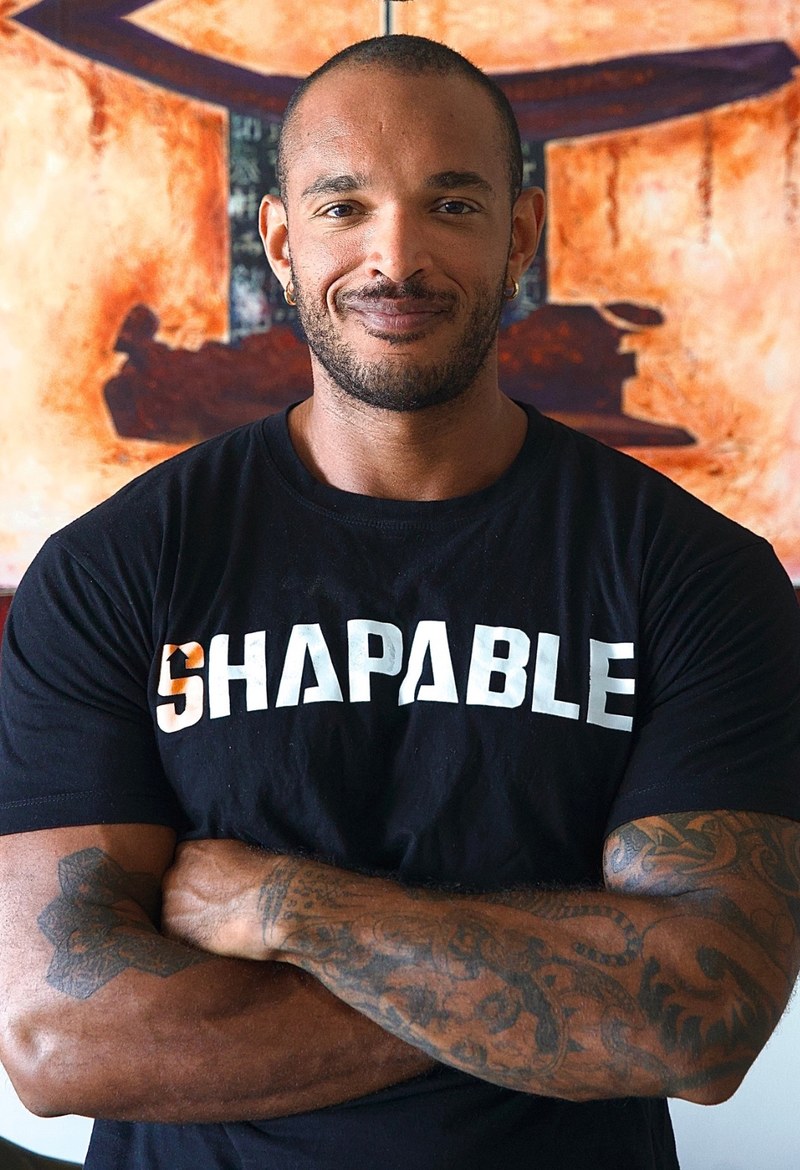
Founder of Shapable. Sports Science and Nutrition graduate, 12 years coaching, and 140 kg at 14. His team has coached more than 1,000 men.
About Cesare →Sources (11)
- Spiegel K, Tasali E, Penev P, Van Cauter E (2004). Sleep curtailment in healthy young men is associated with decreased leptin levels, elevated ghrelin levels, and increased hunger and appetite. Ann Intern Med 141(11):846–850. PubMed 15583226.
- Nedeltcheva AV et al. (2010). Insufficient sleep undermines dietary efforts to reduce adiposity. Ann Intern Med 153(7):435–441. PubMed 20921542.
- Hall KD et al. (2019). Ultra-processed diets cause excess calorie intake and weight gain: an inpatient randomized controlled trial of ad libitum food intake. Cell Metab 30(1):67–77. PubMed 31105044.
- Gardner CD et al. (2018). Effect of low-fat vs low-carbohydrate diet on 12-month weight loss in overweight adults: the DIETFITS randomized clinical trial. JAMA 319(7):667–679. PubMed 29466592.
- Lichtman SW et al. (1992). Discrepancy between self-reported and actual caloric intake and exercise in obese subjects. N Engl J Med 327:1893–1898. doi:10.1056/NEJM199212313272701.
- Sardeli AV et al. (2018). Resistance training prevents muscle loss induced by caloric restriction in obese elderly individuals: a systematic review and meta-analysis. Nutrients 10(4):423. PubMed 29596307.
- Westerterp KR (2004). Diet induced thermogenesis. Nutr Metab (Lond) 1:5. PubMed 15507147.
- Leidy HJ et al. (2015). The role of protein in weight loss and maintenance. Am J Clin Nutr 101(6):1320S–1329S. PubMed 25926512.
- Shukla AP et al. (2015). Food order has a significant impact on postprandial glucose and insulin levels. Diabetes Care 38(7):e98–e99. PubMed 26106234.
- Batsis JA et al. (2021). A systematic review of dietary supplements and alternative therapies for weight loss. Obesity 29(7):1102–1113. doi:10.1002/oby.23110.
- Wing RR, Phelan S (2005). Long-term weight loss maintenance. Am J Clin Nutr 82(1 Suppl):222S–225S. PubMed 16002825.
Last updated . Educational information, not medical advice. Speak to your doctor before changing medication or starting supplements, especially if you have a medical condition.