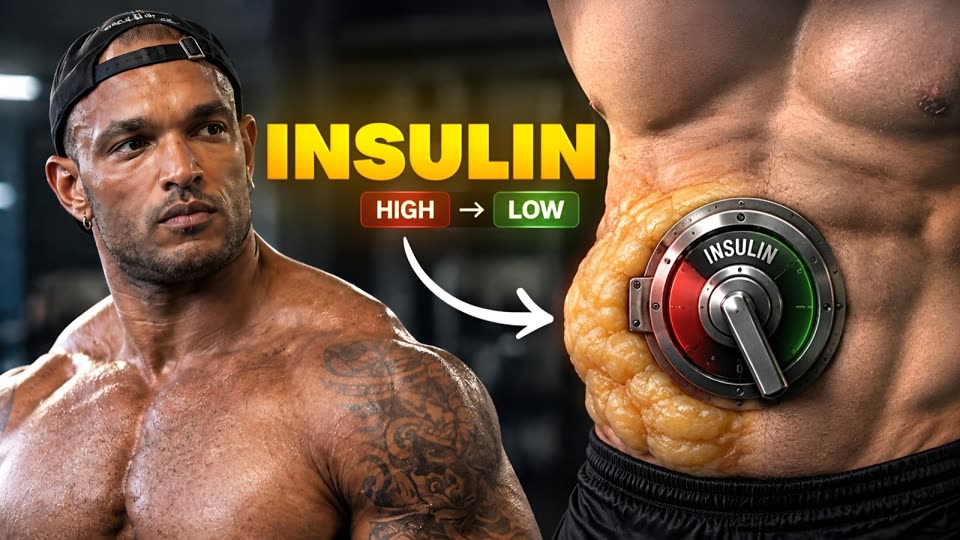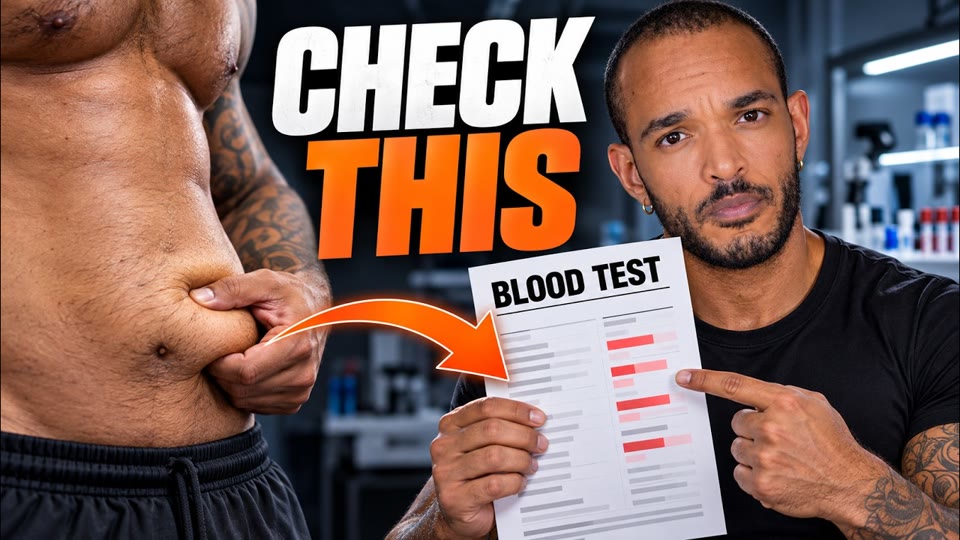
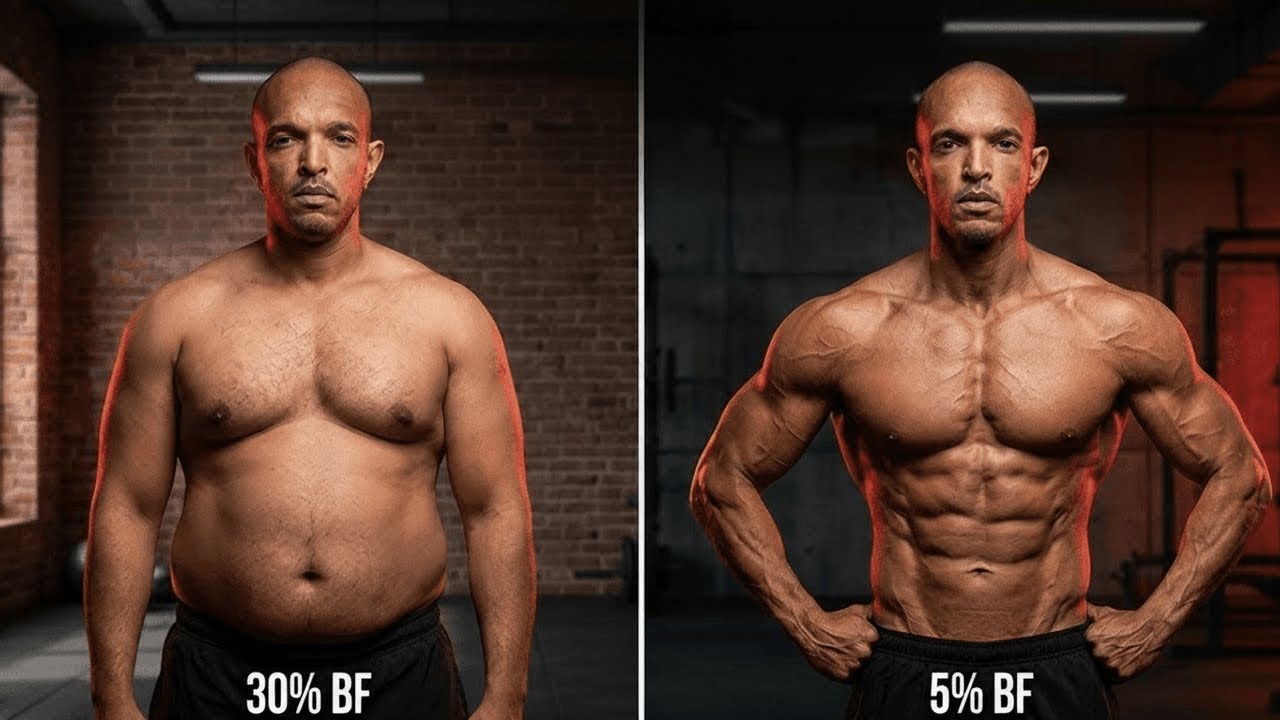
- You lose belly fat by eating smarter, not by eating less: more volume, more protein, same calories.
- Drink 300 to 500 ml of water before each main meal. In trials it added 1 to 2 kg of extra weight loss in 12 weeks.
- Start every meal with protein, then build the plate around it.
- Walk 12,000 to 15,000 steps a day. It's fat loss without dieting harder.
- Keep most of your carbs around training instead of spreading them across the day.
Quick answer: To lose belly fat without starving, keep a calorie deficit you can actually live with. Drink 300 to 500 ml of water before meals, fill half your plate with vegetables and high-fibre food, start every meal with protein, walk 12,000 to 15,000 steps a day and keep most of your carbs around training. Same food, bigger plates, no hunger.
I used to weigh 140 kg (309 lb). I know what it's like to leave the house late at night for the corner shop and come back with a bag of chocolate. To feel like your body just doesn't respond the way other people's do.
It wasn't my body. I was sabotaging my own progress with constant snacking, and every diet I tried left me starving and frustrated within days. So I'd quit.
If you're a man in your thirties or forties and you want to know how to lose belly fat without starving, here's the honest version. None of this is sexy. There's no magic wand. But these five habits are the exact things that got me out of obesity, and the same things I use with the men I coach today. As someone who used to be obese, nothing scares me more than extremes. So all five make this simpler, not harder.
Why does starving yourself not work for belly fat?
Because you can't stick to it. And if you can't stick to it, you don't lose the weight. Eating less sounds logical, so you cut portions and spend the whole day hungry. A few days later you're back at the fridge, and the belly is still there.
The answer was never eating less. It was eating smarter. So belly fat comes off the same way all fat does, through a calorie deficit over months. The trick is to build a deficit that doesn't feel like one. Each of the five habits below lowers your calories without making you hungrier. Stack all five and you'll lose fat. And there's a reason I put the plate one second, not first. It's the one that changed everything for me.
Are you hungry, or just thirsty?
A lot of the time, you're thirsty. In my years of coaching, most of the between-meal hunger I see in clients disappears with a big glass of water. The brain is bad at telling the two apart, so you snack and crave when your body just needs fluid.
Here's the protocol:
- When you wake up, drink 500 ml (17 oz) of water with electrolytes (sodium, potassium, magnesium) and one tablespoon of apple cider vinegar.
- Before every main meal, drink 300 to 500 ml of water. Wait 10 minutes, then eat.
- Hungry between meals? Drink first. Most of the time the "hunger" goes away, because it was never hunger.
And the pre-meal water has real trials behind it. Adults aged 55 to 75 on a diet who drank 500 ml of water before each meal lost about 2 kg more over 12 weeks than those on the diet alone (Dennis, 2010). In Birmingham, GP patients with obesity who drank 500 ml 30 minutes before main meals lost 1.3 kg more in 12 weeks (Parretti, 2015).
The apple cider vinegar is a helper for blood sugar and fullness. Adding vinegar to a bread meal lowered the glucose and insulin response and raised satiety in healthy adults (Östman, 2005). Obese Japanese adults who drank 15 to 30 ml of vinegar a day in water for 12 weeks had lower body weight, waist and visceral fat than the placebo group (Kondo, 2009). Always dilute it. If you take diabetes medication, speak to your doctor first.
What is volume eating, and why does it work?
Volume eating means putting the biggest amount of food on your plate without raising the calories. This is the habit that took me from 140 kg to where I am today. It sounds almost too simple. That's the point.
Fullness isn't about calories. It's about volume. Vegetables and high-fibre food take up space in your stomach for very few calories, so a bigger plate keeps you full while the deficit does its job. Researchers call this lowering the energy density of your diet. In a year-long trial, women with obesity who cut fat and ate more fruit and vegetables lost 7.9 kg against 6.4 kg for cutting fat alone. They ate a greater weight of food and reported less hunger (Ello-Martin, 2007).
You don't need a new diet. You adjust the one you have:
| Instead of | Try | What it does |
|---|---|---|
| A big bowl of rice | Potatoes | More food on the plate for the same calories |
| Plain pasta | Pasta with peppers and courgette mixed in | You still get the pasta, the bowl just gets bigger |
| Heavy, creamy sauces | Lighter versions of the same sauce | Same taste, a lot fewer calories |
| Cutting meals smaller | Half the plate vegetables or high-fibre food | Full stomach, deficit stays easy |
One catch. If you jump from low fibre to high fibre overnight, you'll feel it: bloating, gas, a stomach that isn't happy. Build it up over a couple of weeks and find your tolerance. Once it's dialled in, this is one of the easiest ways to control calories without feeling restricted. But if the swaps stop working, the problem may sit deeper, and that's where insulin resistance and belly fat comes in.
Why should you start every meal with protein?
Because protein is the most filling macronutrient, so starting with it means you eat less of everything else without tracking a single calorie. Most people think they need to count perfectly to lose fat. You don't. You need control, and protein is the easiest way to get it.
Every meal, ask one question first: where's my protein? Chicken, eggs, fish, beef, yoghurt, a protein shake. Lock it in, then build the rest of the plate around it. So most men overeat carbs and fats because they didn't eat enough protein early in the meal, so they chase fullness and the calories climb.
And the research backs you here. When researchers raised protein from 15% to 30% of calories and let people eat as much as they wanted, intake dropped by 441 kcal a day and they lost 4.9 kg in 12 weeks (Weigle, 2005). A review in the American Journal of Clinical Nutrition points to 1.2 to 1.6 g of protein per kg of body weight a day, with roughly 25 to 30 g per meal (Leidy, 2015). The order matters for blood sugar too. Adults with type 2 diabetes who ate protein and vegetables before carbs had clearly lower glucose and insulin after the meal (Shukla, 2015).
Try protein first, every meal, for one week.
How many steps a day do you need to lose belly fat?
More than 10,000. That number is fine, but if you actually want to get lean, push it to 12,000 or 15,000, sometimes more. It's boring. It might also be the most important habit on this list, because it's fat loss without dieting harder.
Most men trying to lose weight just try to eat less, when the real problem is they're not moving. After years of coaching, the clients who hit the highest step counts are always the ones who get lean fastest. They can often eat more food and still lose fat, because their energy output is so much higher.
Take Stewart, one of our clients, who you can see on our results page. He was 48 and started at 160 kg (353 lb). His doctors wanted him on GLP-1s. He said no. He lost 55 kg (121 lb) in 11 months. His one constant was 15,000 steps, every day. And we never took his calories below 2,200.
The science backs the pattern. In a Mayo Clinic study, mildly obese people sat about 2 hours longer a day than lean people, and the researchers estimated that moving like the lean group could burn roughly 350 extra kcal a day (Levine, 2005). Breaking up long sitting with light walking also lowers blood sugar and insulin after meals (Buffey, 2022).
You don't need a two-hour walk. Break it up:
- A short walk in the morning.
- A walk during the day, maybe on a call.
- Another walk in the evening, after dinner.
- Park further away and take the stairs.
- No time at all? Put a walking pad under your desk and walk while you work.
You don't need more time. You need better systems.
When should you eat carbs to lose fat?
Mainly around your training. Most men don't have a carb problem. They have a carb distribution problem: carbs at breakfast, in snacks, random bites all day, and before you know it the calories are far higher than they should be.
So we don't remove carbs. We control them:
- Before training, you eat carbs to fuel the session.
- After training, you eat carbs to support recovery.
- The rest of the day, you go higher protein, controlled fats, lower carbs.
When you do this, total calories drop without counting them. Energy gets steadier, you lose the spikes and crashes, cravings go down, and you still get the benefit of carbs when they matter. You're not cutting them. You're using them properly. For a lot of men, me included, this alone makes a big difference. It's also what we did with Stewart: he didn't cut carbs, we timed them.
Do you need supplements to lose belly fat?
No. The five habits above are the foundation, and if they're not in place nothing else matters. Once they are, a basic stack can make the work a bit more effective. Keep it simple:
- Creatine helps you get stronger and perform better in the gym. It's one of the most researched supplements there is, and long-term use has been shown to be safe and well tolerated in healthy people (Kreider, 2017).
- Protein powder makes your protein target easy on busy days.
- Magnesium is what I use for sleep and recovery, and sleep feeds straight into fat loss.
- Omega-3 fish oil is the last piece of my basic stack.
You don't need a complicated stack or expensive nonsense. Supplements don't replace hard work. Speak to your doctor before adding anything if you take medication. For the full list of what I'd tell myself at the start, read 21 things I wish I knew before losing weight.
Where would I start this week?
- Tomorrow morning: 500 ml of water with electrolytes and a tablespoon of apple cider vinegar, before anything else.
- Every main meal: 300 to 500 ml of water, wait 10 minutes, then protein first.
- Make one swap a day: potatoes for rice, vegetables in your pasta, a lighter sauce. Build up the fibre slowly.
- Add 2,000 steps to whatever you do now, then keep adding each week until you're at 12,000 to 15,000.
- Move your carbs to the meals before and after training.
Stick these five together and you'll lose fat, you'll have more energy, and it'll actually last. If you want to understand the dangerous fat around your organs too, read how to lose visceral fat. The free guides walk you through the food side step by step. And if you want help applying all of this with your hormones, training, nutrition and accountability, you can apply to work with me.
 8:38
The Foundations of Fat Loss
The five boring things that actually take off 20 lbs. Comment DIET on any of my Instagram reels and I'll send it to you.
Get it free →Frequently asked questions
Can you lose belly fat without starving yourself?
Yes. Starving is why most diets fail, because you can't stick to it. You lose belly fat by staying in a calorie deficit you can live with: bigger plates of vegetables and high-fibre food, protein at every meal, water before meals and more daily steps. You eat the same calories but feel full, so the deficit actually lasts.
Does drinking water before meals help you lose weight?
It helps a little, and it costs nothing. In a 12-week trial of adults aged 55 to 75, drinking 500 ml of water before each meal on a diet added about 2 kg of weight loss. A UK trial in GP patients with obesity found 1.3 kg extra over 12 weeks. Drink 300 to 500 ml, wait 10 minutes, then eat.
How many steps a day do I need to lose belly fat?
10,000 is fine for health, but if you want to get lean, push it to 12,000 to 15,000. In my coaching, the men with the highest step counts get lean fastest and can eat more while they do it. Break it up: a walk in the morning, one during a call, one after dinner. A walking pad under your desk helps.
Should I eat protein first at every meal?
Yes. Protein is the most filling macronutrient, so starting with it means you eat less of everything else without tracking. In one trial, raising protein from 15% to 30% of calories cut intake by 441 kcal a day on its own. Pick chicken, eggs, fish, beef, yoghurt or a shake first, then build the plate.
Is it bad to eat carbs if I want to lose belly fat?
No. Most men don't have a carb problem, they have a carb distribution problem: carbs at breakfast, in snacks and random bites all day. Keep carbs mainly before and after training, and keep the rest of the day higher in protein, with moderate fat and fewer carbs. You keep the benefits and the total calories drop.
Does apple cider vinegar help burn belly fat?
It's a helper, not a fat burner. Vinegar with a meal lowered blood sugar and insulin and raised fullness in a Swedish study, and obese Japanese adults drinking 15 to 30 ml a day for 12 weeks lost a little weight and visceral fat. Always dilute it in water, and speak to your doctor first if you take diabetes medication.
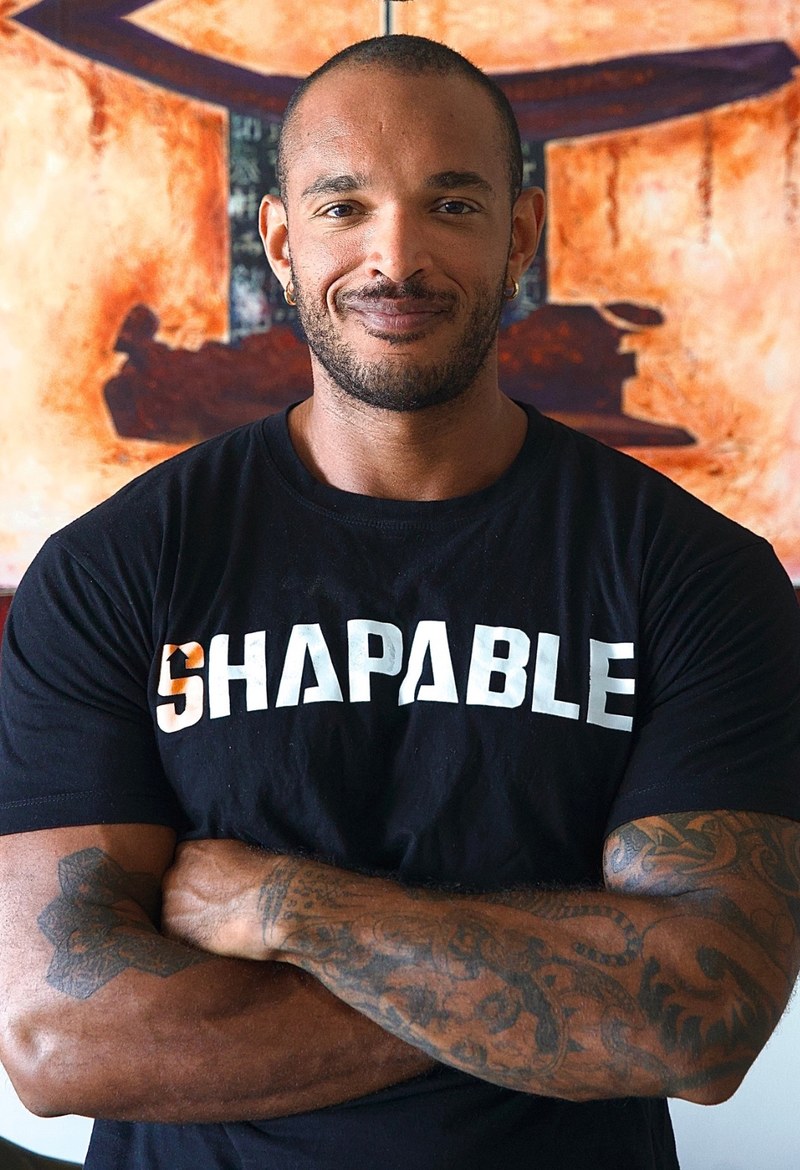
Founder of Shapable. Sports Science and Nutrition graduate, 12 years coaching, and 140 kg at 14. His team has coached more than 1,000 men.
About Cesare →Sources (11)
- Dennis EA et al. (2010). Water consumption increases weight loss during a hypocaloric diet intervention in middle-aged and older adults. Obesity 18(2):300–307. PubMed 19661958.
- Parretti HM et al. (2015). Efficacy of water preloading before main meals as a strategy for weight loss in primary care patients with obesity: RCT. Obesity 23(9):1785–1791. PubMed 26237305.
- Östman E et al. (2005). Vinegar supplementation lowers glucose and insulin responses and increases satiety after a bread meal in healthy subjects. Eur J Clin Nutr 59(9):983–988. PubMed 16015276.
- Kondo T et al. (2009). Vinegar intake reduces body weight, body fat mass, and serum triglyceride levels in obese Japanese subjects. Biosci Biotechnol Biochem 73(8):1837–1843. PubMed 19661687.
- Ello-Martin JA et al. (2007). Dietary energy density in the treatment of obesity: a year-long trial comparing 2 weight-loss diets. Am J Clin Nutr 85(6):1465–1477. PubMed 17556681.
- Weigle DS et al. (2005). A high-protein diet induces sustained reductions in appetite, ad libitum caloric intake, and body weight. Am J Clin Nutr 82(1):41–48. PubMed 16002798.
- Leidy HJ et al. (2015). The role of protein in weight loss and maintenance. Am J Clin Nutr 101(6):1320S–1329S. PubMed 25926512.
- Shukla AP et al. (2015). Food order has a significant impact on postprandial glucose and insulin levels. Diabetes Care 38(7):e98–e99. PubMed 26106234.
- Levine JA et al. (2005). Interindividual variation in posture allocation: possible role in human obesity. Science 307(5709):584–586. PubMed 15681386.
- Buffey AJ et al. (2022). The acute effects of interrupting prolonged sitting time in adults with standing and light-intensity walking on biomarkers of cardiometabolic health: a systematic review and meta-analysis. Sports Med 52(8):1765–1787. PubMed 35147898.
- Kreider RB et al. (2017). International Society of Sports Nutrition position stand: safety and efficacy of creatine supplementation in exercise, sport, and medicine. J Int Soc Sports Nutr 14:18. PubMed 28615996.
Last updated . Educational information, not medical advice. Speak to your doctor before changing medication or starting supplements, especially if you have a medical condition.